Blog posts I have authored, hosted by various outlets.
-
![]()
Observations for the next generation of polar prediction
A PCAPS blog post describing the 2026 AR Recon Workshop and the 2nd Observational Campaigns Workshop for Better Weather Forecasts, at which I presented our ORCAS task team. Click here for the slides.
The post argues that future polar observing campaigns must collect well-documented, process-focused, and partly independent observations so they can improve both conventional and AI-based forecasts, especially in planning for Antarctica InSync and IPY5.
-
![]()
Antarctic sea ice in 2026 and the challenge of predictability
A PCAPS blog post explaining that recent Antarctic sea ice change is hard to read and predict because short-term weather and long-term climate change interact in complex ways.
This post relates to a Carbon Brief article, “‘Very alarming’ winter sees Arctic sea ice hit record-low for second year running”, that I provided comments on.
-
![]()
ORCAS community workshop highlights
A PCAPS blog post describing the ORCAS community workshop, which brought together researchers from operations, field science, remote sensing, and AI modelling to define how observations can better support AI-based sea ice prediction.
The workshop report is available on Zenodo: https://zenodo.org/records/19543215
-
![]()
Bridging the gap between AI and observations for sea ice forecasting
A PCAPS blog post describing ORCAS, a new community effort to improve AI sea ice forecasting in the Arctic and Antarctic by linking model development with field and satellite observations, testing current systems, and guiding future data collection and trust-building.
ORCAS is also a SCOR Working Group
Older posts
-
![]()
Reflections on polar predictability challenges from three events in Korea - July 2025
This PCAPS blog post reflects on three Korea-based events in July 2025 that focused on Antarctic climate and sea ice predictability, with a strong link to PCAPS goals.
It highlights the need for better observations, closer links between science and operations, and user-focused forecasting to improve polar prediction.
-
![]()
Inaugural Ross Sea Research Coordination Network Workshop
This PCAPS blog post reports on the first Ross Sea Research Coordination Network workshop and highlights links with PCAPS, including shared aims in data integration, inclusive collaboration, and better polar forecasting and environmental services.
-
![]()
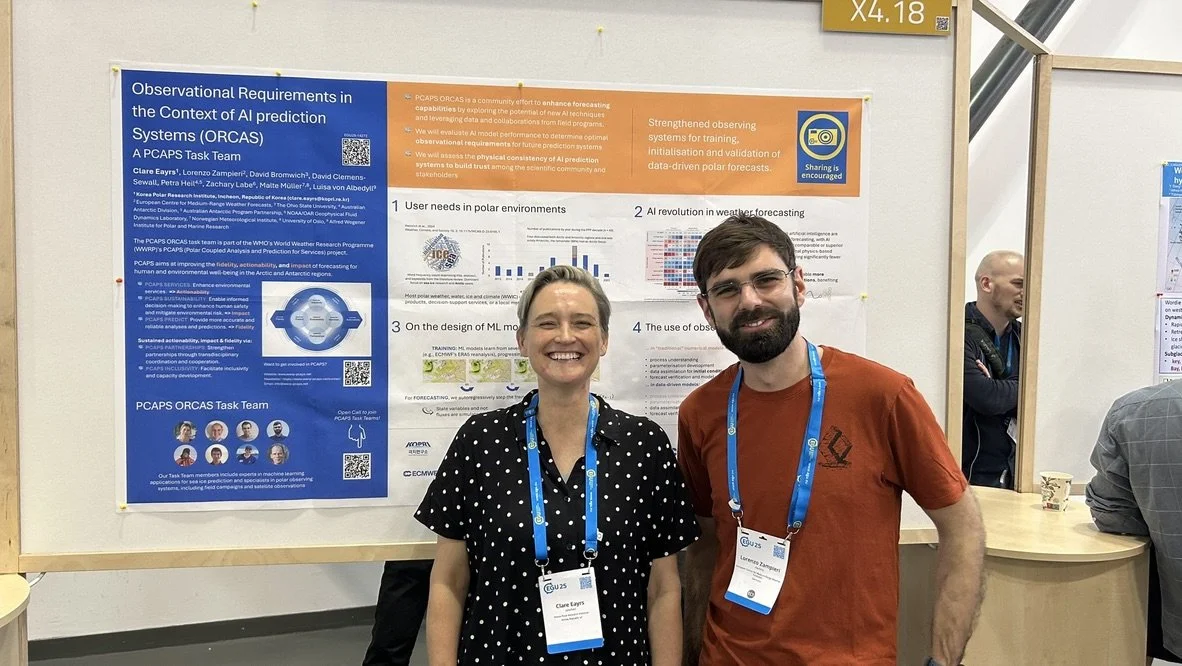
PCAPS ORCAS at EGU25, 27 April–2 May 2025, Vienna, Austria
This PCAPS blog post reports on the PCAPS ORCAS poster at EGU25, which explains why observations are key for training, testing, and building trust in AI-based sea ice forecast systems.
The post highlights the task team’s work to assess which observing data best support AI prediction and how this can guide future polar observing efforts.
-
![]()
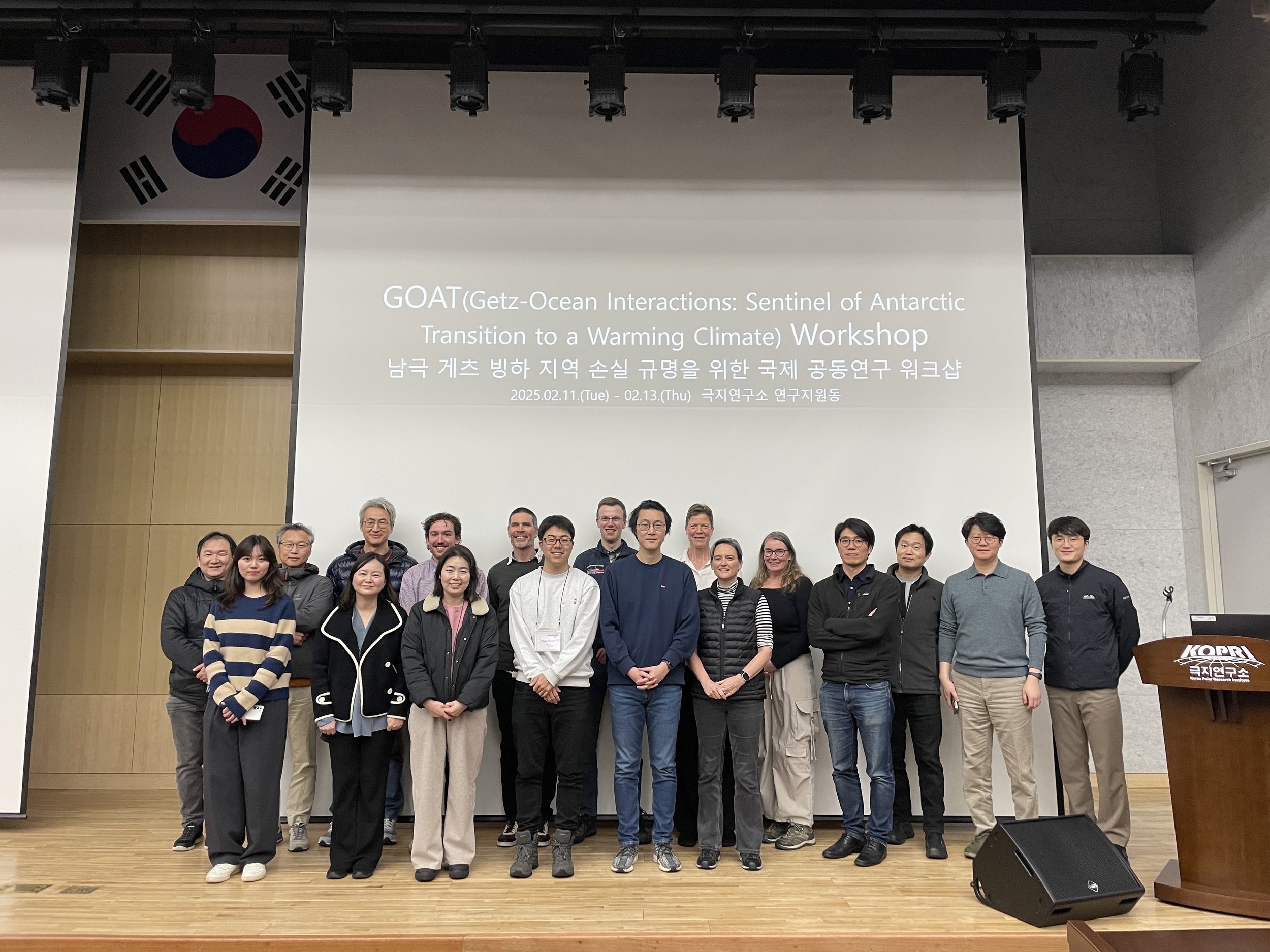
GOAT Workshop brings international experts to KOPRI, Republic of Korea
This PCAPS blog post covers the GOAT workshop at KOPRI, where international experts met to set research priorities for the fast-changing Getz region of West Antarctica. It highlights plans for a review paper, future fieldwork through the K-NOW project, and new work on funding, research, and public engagement.
-
![]()
The growing role of AI in sea ice prediction in a rapidly changing Arctic
This PCAPS blog post describes my experiences speaking at an ECR event and on a panel at Arctic Partnership Week 2024.
The post highlights how early-career networks and AI are shaping the future of polar science, with a strong focus on improved sea ice prediction in a fast-changing Arctic.
-
![]()
Meet the PCAPS SG: Clare Eayrs
My PCAPS Steering Group introduction post.
-
![]()
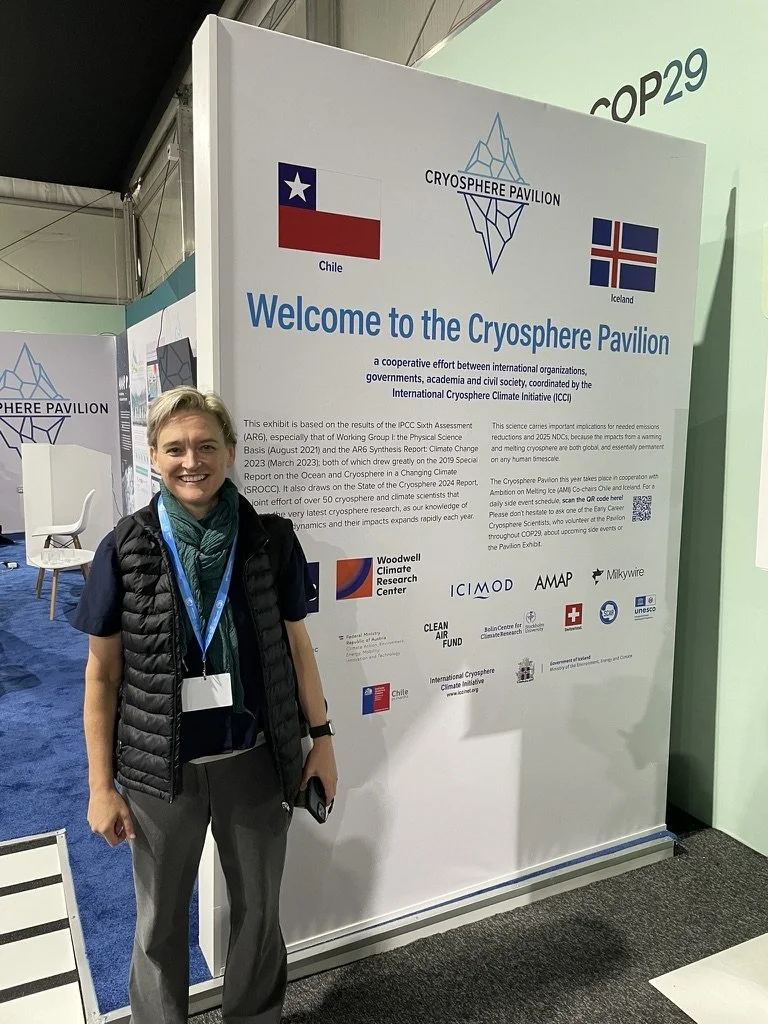
PCAPS reflections from COP29, Baku, Azerbaijan
This PCAPS blog post reflects my experiences at COP29.
The post focuses on why better Antarctic and Southern Ocean observations matter for forecasts, climate risk, and adaptation.
It links cryospheric hazards, early warning needs, and global gaps in sustained observations, data access, and scientific capacity.